Dry Tortugas National Park Highlights: Fort Jefferson & Garden Key

Updated: Nov 12
Dry Tortugas National Park Highlights
Dry Tortugas National Park sits far out in the Gulf, past Key West, where a huge brick fort fills nearly all of a tiny island. Reef water runs clear around it and seabirds crowd the neighboring keys. Here are the three sights worth your limited hours, ranked, with the specs and timing to dial it in.

Top 3 Must-See Highlights
Fort Jefferson: the six-sided brick fort that fills almost all of Garden Key
Snorkeling the Reef: shallow coral and fish along the moat wall
Garden Key: the small island that holds the fort, the harbor and the campground
1. Fort Jefferson
Fort Jefferson is the reason most people make the trip. Its brick walls rise straight out of the water, with rows of arched gun openings, spiral stairs and a wall-top walk. Dig into the deep-cut history: the fort was never finished, and it later served as a prison. Walk the lower tier first, then climb to the top for the long view.
2. Snorkeling the Reef
The reef is the counterweight to all that brick. Along the outside of the moat wall, coral heads and schooling fish sit in shallow, clear water. Bring your own kit if you can, since your time on the island is short. Stay off the coral, and ask rangers about current conditions before you get in.
3. Garden Key
Garden Key is small enough to cover on foot in under an hour, which is exactly the point. Sand, shade under the fort walls and the harbor make it an easy, relaxing walk at a leisurely pace. Look across the water to Bush Key, where seabird colonies noisily claim the sand. Pack binoculars and keep your distance from nesting birds.
Quick Specs for the Top 3
Fort Jefferson: The moat wall walk is well under a mile round trip, flat and easy, about 30–45 minutes; allow another hour for the fort itself and the stairs to the top of the walls
Snorkeling Coral Reefs: Shore entry from Garden Key, shallow water, easy to moderate difficulty depending on current and wind
Garden Key: A small island you can walk end to end in well under an hour, with sand, shade under the fort walls and no elevation to speak of
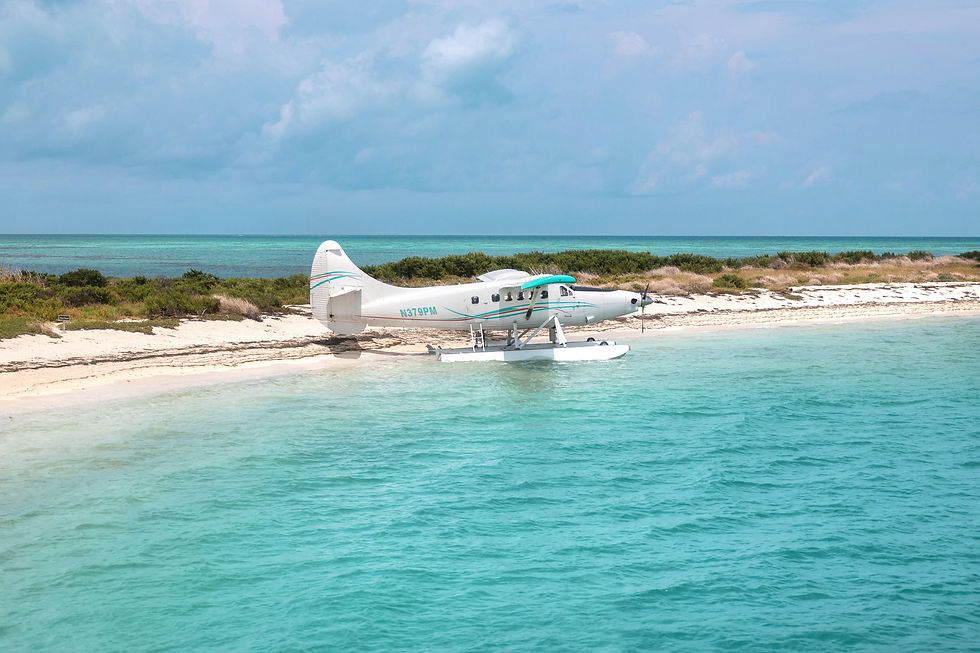
Getting there: About 70 miles each way from Key West by ferry or seaplane; check the National Park Service website for current options
Timing Tip
Day trips give you only a few hours on the island, so snorkel first while the water is calm and the light is high, then tour the fort. Campers get the islands to themselves after the last boat leaves.
Scenic Viewpoints Along the Way
Top of Fort Jefferson: The whole island, the moat and miles of turquoise water from the top of the walls
Moat Wall: A walk right at the waterline, best in morning light when the water is calm
Garden Key Harbor Light: The old iron lighthouse on the fort wall, a landmark from every side of the island
South Swim Beach: Looking across to Bush Key and the bird colonies, best at sunset
The flight or ferry in: The first sight of the fort rising out of open water
Photography and Timing Tips
Sunrise and sunset are your best light. Low sun turns the brick warm and flattens the glare on the water, so the arches and the moat photograph best early or late. Campers get both windows; day-trippers usually get only the middle of the day, so aim for the walls' shaded arches and use a polarizing filter on the water. Salt spray and sand are hard on gear, so keep a dry bag and a lens cloth handy.
Quick Tips
Check the National Park Service website for current fees, ferry and seaplane options, camping details and rules before you book.
Bring your own shade, water per person and sun protection. There is little cover on the island.
Pack it out. Leave No Trace applies on every key.
Reading the Water
Conditions out here change by the hour, and they decide how your day goes.
Nested Tip: Wind and Water
Wind decides the snorkel. On a breezy day, the water clouds up and the swim gets harder, so check conditions with a ranger and have a backup plan, like the fort tour, ready.
Explore more of Dry Tortugas National Park: Dry Tortugas National Park: Remote Islands West of Key West

🌲 WILD DIRT OFFICIAL TRAILHEAD: National Park Field Guides & Adventure Gear — Gear up for the backcountry with our sustainably crafted trailhead apparel, field guides, and waterproof topographic trail maps. [Explore the Collection →]


Fort Jefferson on the horizon across open water. Photo: Nick Rickert / Unsplash 
A corner bastion rising from shallow water. Photo: RP C O N C I E R G E / Unsplash 
The fort entrance with an old anchor on the lawn. Photo: NPS staff / Wikimedia Commons (public domain) 
Map of Dry Tortugas National Park. Photo: U.S. NPS, restoration / cleanup by National Park Maps / Wikimedia Commons (public domain)
Sources
Photos
Fort Jefferson's brick walls with the lighthouse behind. Photo: Nick Rickert / Unsplash
Fort Jefferson on the horizon across open water. Photo: Nick Rickert / Unsplash
A corner bastion rising from shallow water. Photo: RP C O N C I E R G E / Unsplash
The fort entrance with an old anchor on the lawn. Photo: NPS staff / Wikimedia Commons (public domain)
Map of Dry Tortugas National Park. Photo: U.S. NPS, restoration / cleanup by National Park Maps / Wikimedia Commons (public domain)
The fort wall and moat with a sandy key beyond. Photo: RuggyBearLA / Wikimedia Commons (CC BY 2.0)
Fort Jefferson seen from the air on its coral island. Photo: NPS / Wikimedia Commons (public domain)
NPS & Government