Great Basin National Park: Nevada's Dark Sky Mountains

Updated: 5 days ago
Great Basin National Park Intro
Under a starry sky, the night at Great Basin National Park was all starlight and shadow, darker and clearer than any night I had seen in years. The desert air carried a whisper of juniper and sage. As I wandered the silent trails that crisscrossed the rugged landscape, I felt embraced by the park's rare, raw beauty.

Venturing deeper into the wilderness, the whispers of the desert surrounded me, painting a picture of a world untamed and ancient. I roamed through groves of ancient bristlecone pines, their gnarled branches telling stories of centuries past. Each twisted tree seemed to hold its secrets, having endured harsh storms and serene sunsets for millennia.
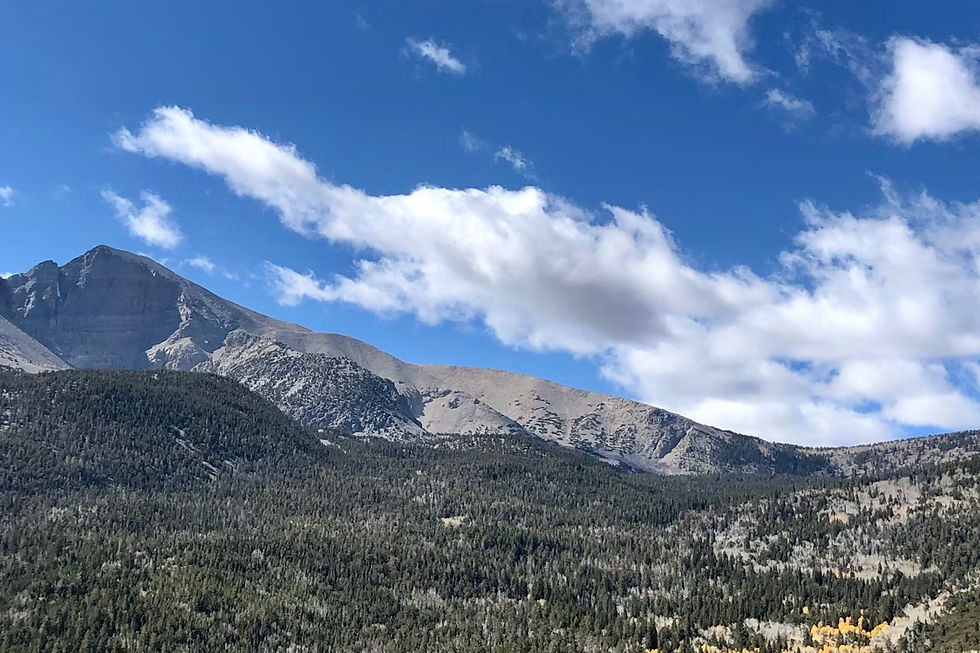
I found solace in the tranquility of the Lehman Caves. The cool air within the caverns starkly contrasted with the desert heat outside. Stalactites and stalagmites stood as silent witnesses to the slow passage of time, their formations mesmerizing in the dim light. Wheeler Peak called to me most fiercely. The steep climb tested my legs and lungs, but the view from the summit paid back every step. The landscape sprawled beneath me, a canvas painted in hues of copper and green, with peaks stretching like whispers in the distance.
I slept in a hammock tent that night, swaying gently between the trees. The winds on the mountains played a symphony, rustling the leaves and bouncing me around. It was thrilling and soothing, a perfect lullaby provided by nature. Nightfall brought a celestial spectacle. The Milky Way sprawled across the ink-black sky, with stars shimmering like diamonds strewn across velvet. I lost myself in the universe's immensity, pondering my place within it.
My journey through Great Basin National Park had been a communion with nature, a rendezvous with raw and untamed elements that spoke volumes in their silent expanse. The park's beauty and tranquility left an indelible mark on my soul, a reminder of the timeless wonders that our world holds. Located 300 miles from Las Vegas, Nevada, Great Basin National Park felt like a world away from the city's hustle and bustle. The drive itself transitioned from the urban landscape to the serene wilderness, making the experience even more profound.

Great Basin Fast Facts
Great Basin packs a desert-to-alpine climb into one small park: sagebrush at the foot of the mountains, bristlecone pines and snowfields near the top.
Location: Eastern Nevada, near the Utah border and the small town of Baker
Established: Lehman Caves National Monument in 1922, and a national park since 1986
Size: About 77,000 acres, roughly 120 square miles
Elevation: Up to 13,063 feet at the top of Wheeler Peak
Signature sights: Lehman Caves, the Wheeler Peak Scenic Drive and groves of Great Basin bristlecone pines
Night sky: A certified International Dark Sky Park
Top Attractions at a Glance
Lehman Caves: A marble cave packed with stalactites, columns and rare shield formations, seen on ranger-led tours
Wheeler Peak Scenic Drive: About 12 miles of road climbing to roughly 10,000 feet
Bristlecone Pine Grove: Twisted, weather-worn trees, some several thousand years old, below Wheeler Peak
Alpine Lakes Loop: An easy loop past Stella and Teresa Lakes
Wheeler Peak Summit: A hard-won climb to the top of the park
Stargazing: Ranger-led astronomy programs and dark skies right from the campgrounds
Best Times to Visit
Summer and early fall are the best times for the high country, once the snow melts off the upper trails and the scenic drive is open to its end. Spring and late fall are quiet but cold up high, and winter snow closes the upper road. Lehman Caves stays about 50°F year-round, so cave tours work in any season.
History and Culture of Great Basin
People have lived in this country for thousands of years. The Fremont culture farmed and hunted in the valleys nearby, and the Western Shoshone and Goshute peoples have deep roots in the Snake Range and the basins around it.
From Monument to National Park
Rancher and miner Absalom Lehman began showing visitors through the cave that bears his name in the 1880s. Lehman Caves was protected as a national monument in 1922, and after decades of debate the surrounding South Snake Range became Great Basin National Park in 1986.
The Oldest Trees
In 1964 a researcher cut down a bristlecone pine on Wheeler Peak and later found it was close to 5,000 years old, among the oldest trees ever known. The loss helped push for protecting the groves that remain.
Wildlife and Ecology
The park climbs through sagebrush, pinyon-juniper woodland, aspen and mixed conifer to bare alpine rock, so it holds a lot of life in a few miles. Mule deer, pronghorn, jackrabbits and yellow-bellied marmots live here, along with mountain lions that are rarely seen. Great Basin bristlecone pines grow near treeline, where the cold, dry air and thin soil let them outlast almost every other living thing.
Plan Your Visit
Great Basin is remote, with limited services in Baker, so fill your tank and pack food before you arrive. Check the National Park Service website for current cave tour reservations, road status on the scenic drive and campground details before you go.
For the full picture of Great Basin, use these companion guides:
Great Basin National Park Travel Guide: getting there, cave tours, where to stay and the best hikes
Great Basin National Park Highlights: the top sights at a glance
Great Basin National Park Reflections: the park in a quieter, more personal light
🌲 WILD DIRT OFFICIAL TRAILHEAD: National Park Field Guides & Adventure Gear — Gear up for the backcountry with our sustainably crafted trailhead apparel, field guides, and waterproof topographic trail maps. [Explore the Collection →]
Sources
NPS & Government

