Wind Cave National Park: Cave Below, Prairie Above

Updated: 5 days ago
Wind Cave National Park Intro
Amidst the boundless prairies of South Dakota, a whispered secret awaited—Wind Cave National Park, a trove of subterranean marvels and sprawling grasslands.
My journey began with the hum of tires on the open road, a companion in the quest for uncharted horizons. The vastness of the plains seemed to stretch endlessly, teasing the hidden treasures lying beneath the surface. Upon arrival, the yawning mouth of Wind Cave beckoned—an unassuming entrance to a world beneath our feet. Down in the cave, the passages were lined with boxwork, thin fins of calcite in a honeycomb pattern, lit only by the tour lights. Each formation, an ancient sculpture crafted by the patient hand of time, whispered tales of forgotten eras.
Venturing deeper into the labyrinth, the cave whispered its mysteries—an underground expanse where silence echoed, and the air was laced with the secrets of ages. The cavern’s shadowy chambers unveiled an enigmatic beauty, a realm untouched by the hands of humanity. Emerging from the subterranean realm, the wind greeted us like an old friend atop the grassy knolls—a gentle reminder of the interconnectedness between the depths below and the expanse above. The prairies stretched endlessly, painted in hues of gold and green, resonating with the harmony of nature's rhythm.
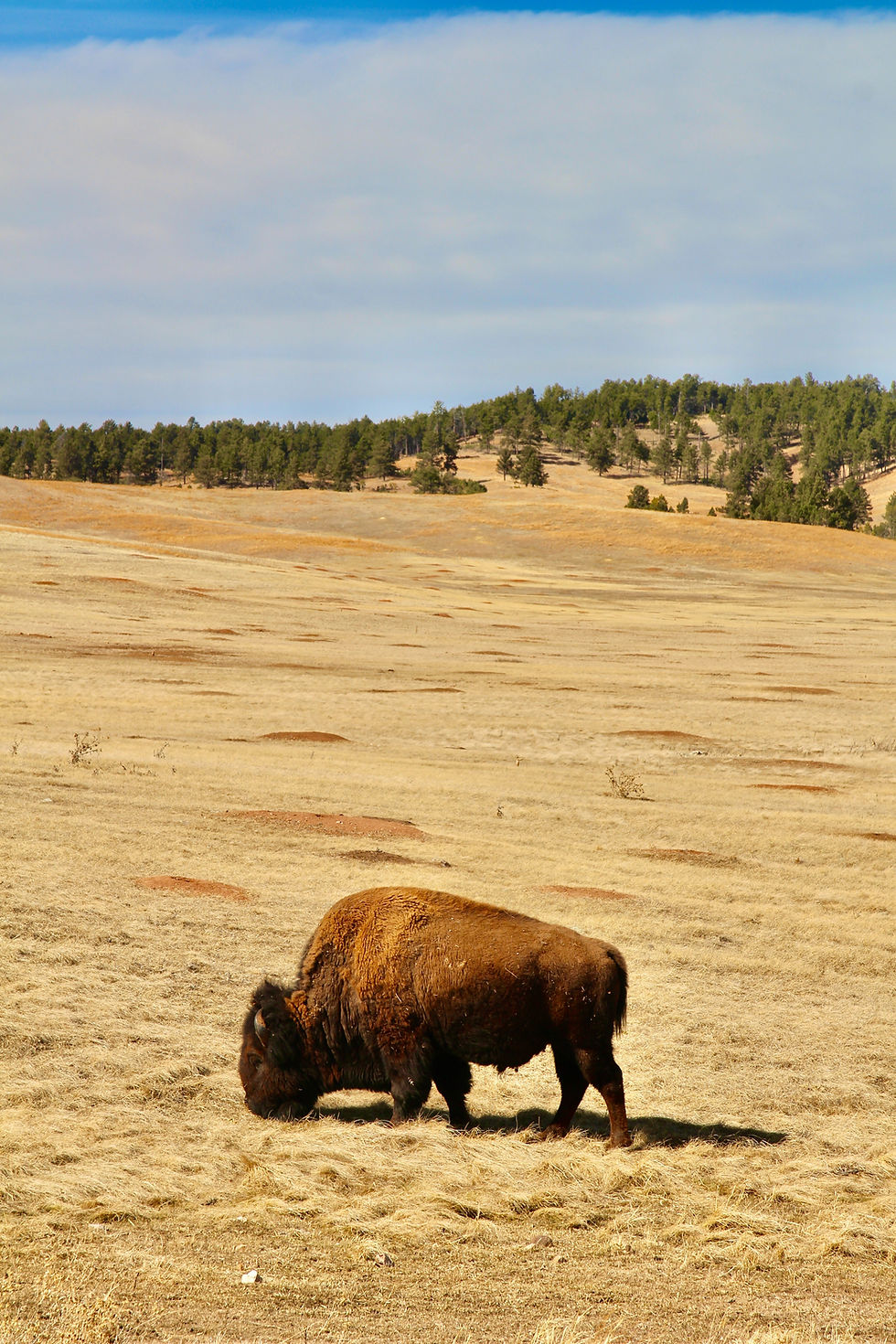
Amidst the undulating grasslands, life flourished—a menagerie of wildlife dotted the landscape. Bison roamed, their majestic presence embodying the spirit of this untamed sanctuary. Prairie dogs chattered from their mounds, one small part of a prairie that is still working the way it should.
As day waned into twilight, we perched atop a solitary hill, embraced by the serenity of the setting sun. The celestial canvas unveiled itself—a spectacle of stars illuminating the vast expanse above, a celestial ballet that whispered tales of the cosmos.
Wind Cave National Park, with its maze of rock underground and windswept prairie on top, stuck with me long after I left. Its whispers echoed through the grasses, calling wanderers to uncover the unseen, to immerse themselves in the unspoiled beauty of this natural haven.


Wind Cave Fast Facts
Wind Cave is two parks in one: a huge, maze-like cave below and a mixed-grass prairie with bison and elk on top.
Location: The southern Black Hills of South Dakota, near Hot Springs
Established: A national park since 1903, the first national park created to protect a cave
Size: About 34,000 acres of prairie and ponderosa pine forest
The cave: More than 150 miles of mapped passages, and it is still being explored
Signature rock: Boxwork, thin blades of calcite in a honeycomb pattern, found here more than almost anywhere else
High point: Rankin Ridge, with a fire lookout tower above the Black Hills
Top Attractions
Most visits split time between a cave tour and the prairie above it.
Cave tours: Ranger-led tours through the cave, from short walks to longer, more strenuous routes
The natural entrance: The small opening where you can feel the cave breathe in and out
Rankin Ridge Trail: A short loop to the fire lookout tower and the best view in the park
Prairie drives: The roads through the park, good for spotting bison, elk and pronghorn
Prairie dog towns: Busy colonies right beside the road
Best Times to Visit
Late spring through early fall has the most cave tours and the best weather for hiking the prairie. The cave stays about the same cool temperature all year, so tours work in any season. Fall brings elk bugling and fewer crowds, and winter is quiet, cold and good for wildlife watching.
History and Culture of Wind Cave
For the Lakota, the cave is a sacred place, tied to their story of how the people first came up out of the earth onto the surface. Other Plains peoples also knew the Black Hills well long before settlers arrived.
From a Whistling Hole to National Park
In 1881 brothers Jesse and Tom Bingham heard wind rushing out of a small hole in the ground, the cave's natural entrance. Explorers, most famously a teenager named Alvin McDonald, spent the 1890s pushing into its passages by candlelight. President Theodore Roosevelt made Wind Cave a national park in 1903.
Why the Cave Breathes
The wind at the entrance comes from changes in air pressure outside. When pressure drops, air flows out of the cave; when it rises, the cave pulls air in. It is the same thing that caught the Binghams' attention more than a century ago.
Wildlife and Ecology
The prairie above the cave is some of the best-protected mixed-grass prairie left in the country. Bison were brought back here in the early 1900s, and today you can see them along with elk, pronghorn, mule deer, coyotes and prairie dogs. The endangered black-footed ferret, which hunts prairie dogs, has also been returned to the park. Keep your distance from bison and never approach them on foot.
Plan Your Visit
Cave tours are the main event and they can fill up, especially in summer. Check the National Park Service website for current tour schedules, ticket and reservation details, and any closures before you go.
For the full picture of Wind Cave, use these companion guides:
Wind Cave National Park Travel Guide: getting there, cave tours, where to stay and the best hikes
Wind Cave National Park Highlights: the top sights at a glance
Wind Cave National Park Reflections: the cave and prairie in a quieter, more personal light
🌲 WILD DIRT OFFICIAL TRAILHEAD: National Park Field Guides & Adventure Gear — Gear up for the backcountry with our sustainably crafted trailhead apparel, field guides, and waterproof topographic trail maps. [Explore the Collection →]
Sources
NPS & Government

