Isle Royale National Park: Wilderness Island in Lake Superior

Updated: 2 hours ago
Isle Royale National Park Intro
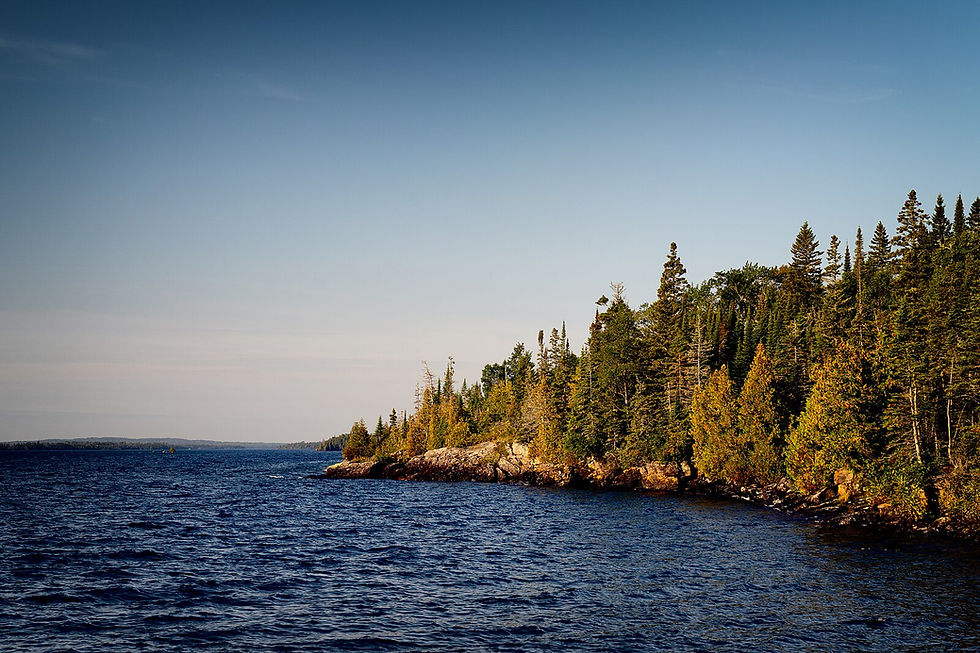
Out in the middle of Lake Superior, where cold mist brushes your cheeks and the air smells of pine, lies the remote island of Isle Royale National Park. My journey to this remote haven was an expedition forged by curiosity and a yearning for solitude amidst the untamed wilds.

The cold, clear water of Lake Superior kept this island to itself. Aboard the ferry, I watched the mainland diminish, the air growing crisper as we ventured deeper into the unknown. The boat's bow sliced through the tranquil waves, leading us to the ethereal realm of Isle Royale.
Stepping onto the island felt like crossing the threshold into another realm. Towering trees loomed overhead, their branches swaying in an ancient dance with the wind. The rugged terrain teased my adventurous spirit, beckoning me to explore every nook and cranny. The trails wound through spruce and fir and over bare rock ridges, out to lookouts where the lake ran all the way to the horizon. Moss-covered stones witnessed the passage of millennia, telling stories of ancient shores and unseen voyages.
As dusk fell, the symphony of the wilderness began. The haunting calls of loons echoed, serenading the moon's ascent into the night sky. Camping amidst the hallowed grounds of Isle Royale allowed me to immerse myself in nature's embrace, feeling the earth's heartbeat beneath my feet.
Days drifted by in a medley of solitude and exploration. Kayaking along the rugged shoreline unveiled secret coves and hidden inlets, each unveiling a piece of the island's enigmatic charm. Underwater wonders revealed themselves to me in the crystal-clear depths, where sunken treasures lay silent witnesses to the passage of time. From the elusive moose that wandered through the woods to the majestic eagles soaring overhead, the island's inhabitants painted a vibrant picture of harmony within this untamed expanse. Their presence reminded us of the delicate balance between humanity and nature.
As my days on Isle Royale drew close, I felt a profound gratitude for the island's raw beauty and serene isolation. Leaving its shores felt like bidding farewell to an old friend, promising to return and uncover more of its mysteries, to bask once again in its untouched splendor. With its unspoiled wilderness and serene solitude, Isle Royale had etched itself into the fabric of my being. Its stories of ancient forests and hidden coves would forever linger, echoing an unforgettable odyssey into the heart of nature's embrace.

Isle Royale Fast Facts
Isle Royale is one of the least visited national parks in the country, and one of the most returned to: there are no roads, and you get around on foot or by boat.
Location: Northwest Lake Superior, part of Michigan but closer to the shores of Minnesota and Ontario
Established: Authorized in 1931, and a national park since 1940
Size: About 850 square miles including the surrounding waters; the main island is about 45 miles long and 9 miles wide
Wilderness: Most of the land is designated wilderness, and the park is also an International Biosphere Reserve
Highest point: Mount Desor, at about 1,394 feet
Season: The park closes in winter and reopens in spring
Top Attractions
Greenstone Ridge Trail: The island's backbone, running about 40 miles from Rock Harbor to Windigo
Rock Harbor: The main hub on the east end, with the lodge, a marina and short trails to Scoville Point
Windigo: The quieter west-end hub, closest to the Minnesota ferries
Lookout Louise: A short climb above Tobin Harbor with views across the water to Canada
Rock Harbor Lighthouse and Edisen Fishery: A historic lighthouse and a restored commercial fishing camp, reached by boat
Best Times to Visit
The park is open from spring through fall. July and August bring the warmest weather and the most ferry service, while June can be cool, wet and heavy with black flies and mosquitoes. September is quieter, with crisp nights and the first fall color. Lake Superior sets the rules year-round, so pack for cold and wind even in summer.
History and Culture of Isle Royale
People have come to this island for thousands of years. Ancestral Native people mined pure copper here long before Europeans arrived, and the Grand Portage Band of Lake Superior Chippewa know the island as Minong and keep deep ties to it today. In the 1800s came copper mining companies, lighthouses and commercial fishing families, some of whose cabins still stand along the shore.
From Fishing Camps to National Park
Congress authorized Isle Royale as a national park in 1931, and it was formally established in 1940. Most of it was designated wilderness in 1976, which is why the island still feels so empty today.
Wildlife and Ecology
Moose and gray wolves are the island's best-known residents. Moose are thought to have reached the island in the early 1900s, and wolves crossed an ice bridge from the mainland around the late 1940s. Scientists have studied them here since 1958, one of the longest-running predator and prey studies in the world. When the wolf population fell to almost nothing, the park brought new wolves to the island in 2018 and 2019. Loons, beavers, red foxes and otters are easier to spot.
Moose on the Trail
You are far more likely to meet a moose than a wolf. They are big, fast and unpredictable, especially cows with calves in early summer and bulls in the fall.
Give Them Room
Stay well back, and if a moose blocks the trail, wait or take the long way around. Never get between a cow and her calf.
Plan Your Visit
Getting to Isle Royale takes planning: ferries run from Houghton and Copper Harbor in Michigan and from Grand Portage in Minnesota, and seaplanes fly from the Upper Peninsula. Check the National Park Service website for current fees, ferry schedules and backcountry permits before you go.
For the full picture of Isle Royale, use these companion guides:
Isle Royale National Park Travel Guide: getting there, permits, where to stay and the best hikes
Isle Royale National Park Highlights: the top sights at a glance
Isle Royale National Park Reflections: the island in a quieter, more personal light
🌲 WILD DIRT OFFICIAL TRAILHEAD: National Park Field Guides & Adventure Gear — Gear up for the backcountry with our sustainably crafted trailhead apparel, field guides, and waterproof topographic trail maps. [Explore the Collection →]
Sources
NPS & Government


