Theodore Roosevelt National Park: North Dakota Badlands

Updated: 4 days ago
Theodore Roosevelt National Park Intro
Under the cloak of darkness, Theodore Roosevelt National Park morphs into a realm of intrigue—a nocturnal escapade teeming with the mysteries of the wild.

As the sun bid farewell, the Badlands transformed into an enigmatic canvas. The star-studded night sky emerged, its celestial dance punctuated by constellations and the glimmering trail of the Milky Way. Amidst this cosmic spectacle, I set out on a night journey—a venture into the heart of the unknown. Once a palette of vibrant hues, the prairie now embraced an ethereal cloak of darkness. The silhouettes of the rugged buttes and mesas stood in stark contrast against the starlit sky, casting elongated shadows that danced in the moon's gentle glow.
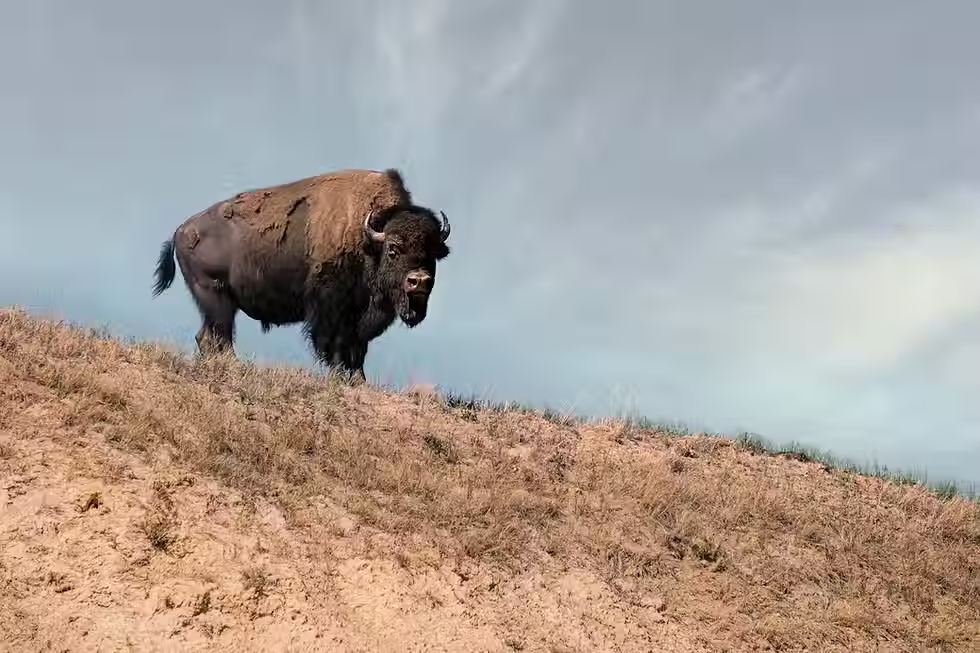
Guided by the soft moonlight, I traversed the trails that wind through the grasslands. A symphony of nocturnal creatures lent their voices to the night—the hoot of an owl, the rustle of small mammals scurrying in the underbrush, and the distant howl of coyotes weaving through the silence. It was the badlands' own night music: coyotes, crickets and the wind in the grass. Coming up on bison in the dark was something I won't forget: a huge shape, a snort, and the smell of dust and grass. Their massive silhouettes grazed quietly under the celestial canopy, their dark shapes blending into the velvety backdrop. The gentle thud of their hooves against the earth was the rhythm of the night, resonating with the pulse of the untamed.
In the hush of the night, the Badlands revealed a mystical allure—a realm where shadows told tales and the stars painted stories across the skies. Theodore Roosevelt National Park, in its nocturnal splendor, whispered secrets of an ancient time, inviting explorers to embrace the wild after the sun sets.
Theodore Roosevelt Fast Facts
This is the park where a young Theodore Roosevelt came to hunt bison and ranch cattle, and where he started thinking hard about conservation.
Location: The badlands of western North Dakota, along the Little Missouri River
Established: National memorial park in 1947, and a national park since 1978
Size: About 70,000 acres, split into the South Unit, the North Unit and the small Elkhorn Ranch Unit
Gateway towns: Medora for the South Unit, Watford City for the North Unit
Signature land: Eroded badlands, grassy tablelands and river bottoms, with layers of clay, sandstone and coal seams
Top Attractions
The park is split into separate units, so plan your time by unit.
South Unit Scenic Loop Drive: The main drive past prairie dog towns, bison herds and badlands overlooks, starting from Medora
Painted Canyon Overlook: A wide look over the badlands right off Interstate 94
Wind Canyon Trail: A short walk to a bluff above the Little Missouri River
North Unit Scenic Drive: A quieter out-and-back road to Oxbow Overlook, with River Bend Overlook along the way
Maltese Cross Cabin: Roosevelt's first ranch cabin, now behind the South Unit visitor center in Medora
Best Times to Visit
Late spring through early fall is the easiest time to visit. May and June bring green grass and new bison calves, and September and early October bring cooler days and fall color in the river bottoms. Summer can be hot, and winter is long, cold and windy, with some roads closed by snow.
History and Culture of Theodore Roosevelt
Plains peoples hunted bison, traveled and camped in these river breaks for thousands of years before ranchers arrived. By the 1880s the big bison herds were nearly gone, and cattle outfits moved into the badlands.
Roosevelt in the Badlands
Theodore Roosevelt first came to the Dakota Territory in 1883 to hunt bison. He bought into the Maltese Cross Ranch and later started the Elkhorn Ranch to the north. He later said he would never have been president without his years in North Dakota, and as president he protected about 230 million acres of public land.
From Memorial to National Park
The land was set aside as Theodore Roosevelt National Memorial Park in 1947 and became a national park in 1978. It still honors the man, and the land that shaped him.
Wildlife and Ecology
Bison were brought back to the park in 1956, and elk followed later. Wild horses roam the South Unit, prairie dog towns dot the flats, and you may also see pronghorn, mule deer, bighorn sheep, coyotes and golden eagles. Stay well back from bison: they are fast, and they do not like being crowded. The badlands themselves are still eroding, with soft clay layers that turn slick and sticky after rain.
Plan Your Visit
The South and North Units are about 70 miles apart, so give each unit its own day if you can. Check the National Park Service website for current entrance fees and road status before you go, since parts of the Scenic Loop Drive have been closed for repairs.
For the full picture of Theodore Roosevelt National Park, use these companion guides:
Theodore Roosevelt National Park Travel Guide: getting there, where to stay and the best hikes
Theodore Roosevelt National Park Highlights: the top sights at a glance
Theodore Roosevelt National Park Reflections: the badlands in a quieter, more personal light
Sources
NPS & Government