Theodore Roosevelt Reflections: Where the Prairie Drops Away

Updated: 4 days ago
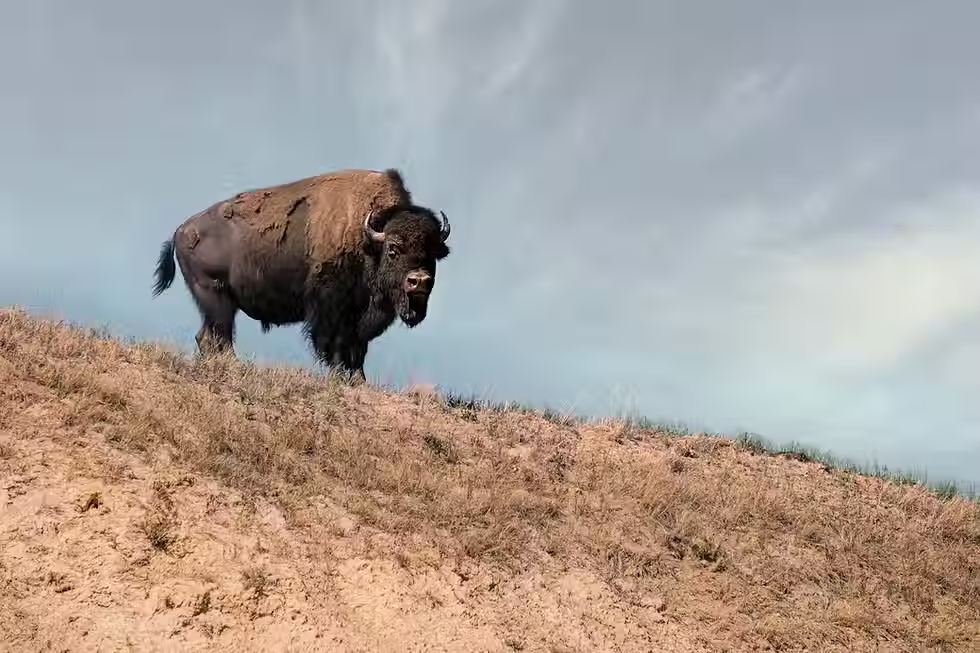
The badlands of western North Dakota don't announce themselves. You drive across flat prairie, and then the ground drops away into striped buttes, cut by the Little Missouri River and softened by sage and grass. Bison graze the road edges, wild horses drift across the ridgelines, and the wind never quite stops. Roosevelt ranched here in the 1880s, and the place stayed with him for the rest of his life. After a few hours, I understood why.

Water, wind and time built this country, one thin layer at a time. Bands of clay, sandstone and dark seams of lignite show in every butte, and the trails run through the cuts between them. The dirt is gray and crumbly, and it turns to slick paste after rain. Check the National Park Service website for current road and trail conditions before you head out.
A Sense of Place
The sound out here is mostly wind moving through grass and cottonwoods, with the odd snort from a bison or the scratch of a prairie dog sounding off from its mound. Then the wind drops, and the silence is large enough to hear your own boots shift. The light matters as much as the sound. Late sun turns the buttes copper and rust, and the river bottoms go soft and green. The scent of sage, and of crushed grass underfoot, stays on your clothes long after you leave.
Up close, the texture of the place is rough: crumbly clay, hard sandstone caps, prickly pear, and bison wool snagged on fence wire. Dry ground crunches under your soles, and the sage leaves a sharp, medicinal smell on your fingers when you brush past. It rewards slow walking and punishes anyone in a hurry. Carry plenty of water per person, wear boots with real tread, give the animals plenty of room, and stay on trail.
Wind Over the Buttes
I remember sitting on a bluff above the Little Missouri at dusk, the wind pushing the grass flat in waves. A bison bull grazed below, close enough that I could hear him tearing up grass, and I felt the heat going out of the ground. Somewhere downriver a meadowlark gave its last song of the day. We stayed until the buttes turned from red to grey, then walked back in the dark, guided by the pale line of the trail and the first stars coming out. Our headlamps stayed in our packs until the final stretch.
Mornings are a different animal. At sunrise the same slopes glow gold, and the prairie dogs are already busy. The cottonwood bottoms hold the cool air longest, and dew darkens the grass along the river. Early starts here pay off in cooler air, long shadows and fewer people between you and the horizon.
What the Badlands Keep
The badlands reminded me why Roosevelt kept coming back. My photos show the striped buttes, but not the smell of sage after rain, the chatter of the prairie dogs, or the howl of coyotes somewhere down the river.
Some places you see once and tick off. This one gets into your boots and stays there. I carried home a little gray dust, and I wouldn't brush it off.
Sources
NPS & Government